On a summer day in 1990, ten children sat in a temporarily converted classroom in the courtyard of the Norwegian Embassy. This was the earliest form of the Beijing Montessori International School.
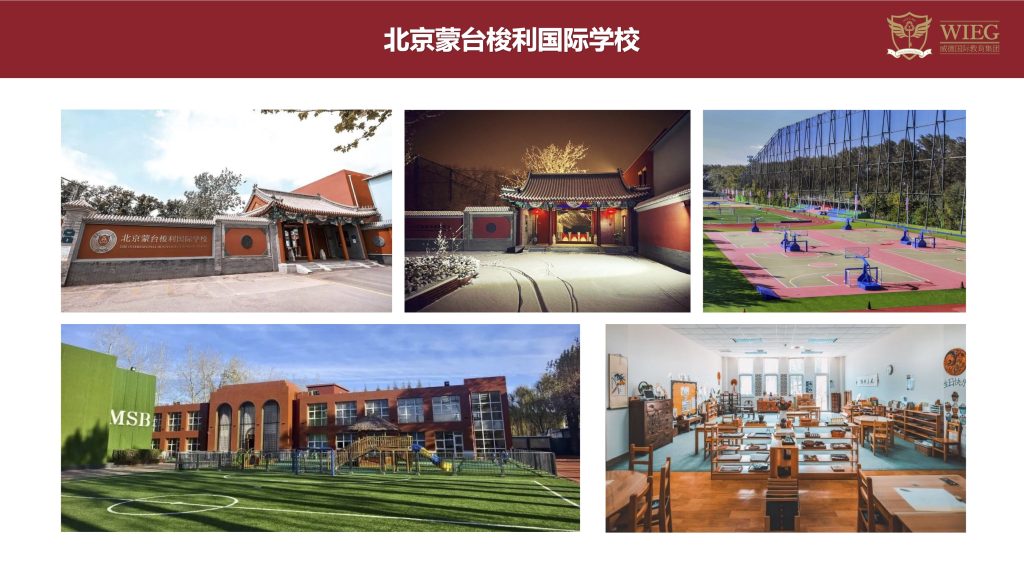
North Xiangjiang Road, Beijing — Today, 35 years later, the school occupies 19,000 square meters with approximately 400 students from 21 countries in an independent campus. It has a formal name — MSB, a history almost as old as international education in China, and a modest yet significant report card: the first school in China to be accredited by the American Montessori Society (AMS) and the first international school in Asia to offer Montessori education for ages 0 to 18.
However, its 35th anniversary is not just about looking back.
An Interrupted Educational History
The fate of Montessori education has seen ups and downs in China.
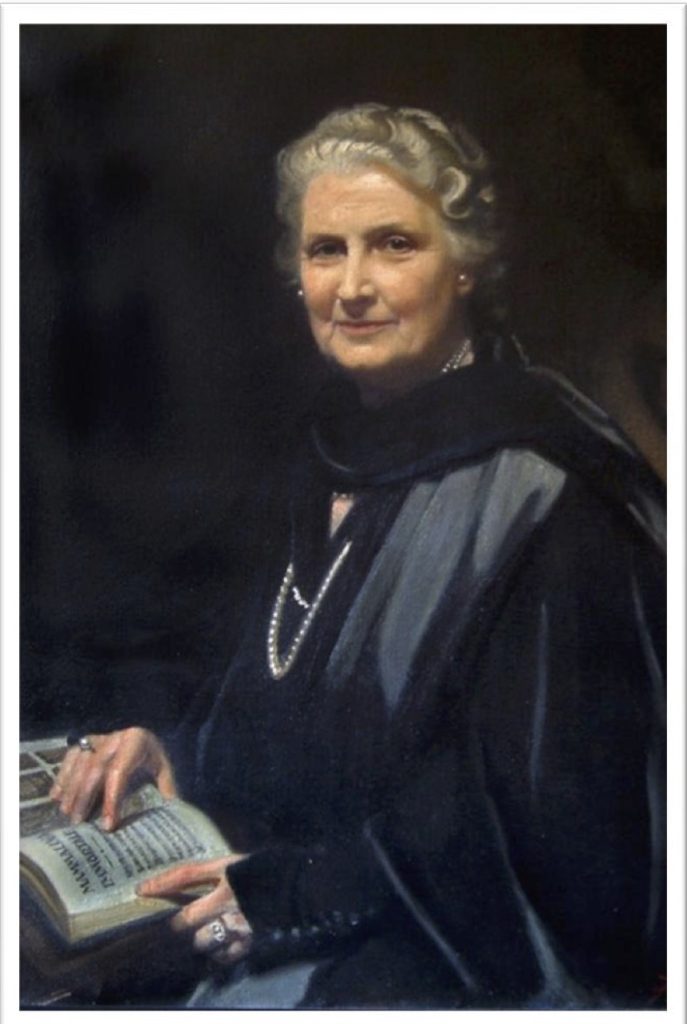
Founded by Italy’s first female medical doctor, Maria Montessori, in the early 20th century, this child-centered, mixed-age, self-directed educational method was introduced to Jiangsu in 1914 and began classes at the National Beiping Women’s Normal University Affiliated Montessori Garden in 1923 — almost in sync with the world. After 1949, it was classified as “bourgeois child-centeredism” and disappeared from mainland China for nearly 40 years.
It wasn’t until 1985, with the publication of Professor Lu Leshan’s “Montessori Early Childhood Education,” that this broken lineage was reconnected. MSB was founded in 1990 — four years before Beijing Normal University officially launched the “Montessori Education Sinicization Experimental Research.” Its initial existence was closed off: operating within embassies and among diplomats, almost parallel to the local education system in China.
A turning point occurred in 1995 when the school moved to the Sanlitun Language and Culture Center for Diplomats. At that time, the vast majority of foreign schools in Beijing still insisted on teaching purely in English, but MSB was the first to offer Chinese courses and was designated as an observation base by the Montessori Research Institute of Beijing Normal University. The seeds from the embassy classrooms began to influence the local early childhood education sector in China.
In 2012, all campuses merged to the current location on North Xiangjiang Road. In 2019, the middle school officially opened. A school originally serving only diplomatic families quietly completed a full-chain extension from infants to middle school.
Making the Most Expensive Bet in the Worst Market
MSB’s 35th anniversary coincides with a challenging period for international education in China.
According to data from the Beijing Statistics Bureau, the number of foreign students in Beijing dropped from 8,523 in 2006 to 4,954 in 2020, halving in 14 years. The three-year pandemic caused this trend to continue downward. By the end of 2023, the established international school BISS in Beijing announced its closure, and the Singapore International School completely exited the Chinese market. Even top institutions like Shunyi International School raised their application fee from 2,000 yuan to 2,800 yuan and added a one-time enrollment fee of 15,000 yuan — typically interpreted in the industry as an adjustment of income structure under pressure of student enrollment.
The judgment from Hurun’s “2025 China International School Rankings” is even more direct: foreign schools for expatriates “face the dilemma of a decreasing number of foreign personnel in China.” Hurun observed that the number of Chinese students studying in the U.S. has dropped from a peak of 370,000 to 280,000, and for the first time, India has surpassed China; the proportion of Chinese students studying in the U.K. among international students has fallen from 32% to 22%.
In this context, in 2025, MSB will launch three initiatives.
In partnership with PYLUSD in California for the American high school program. The Puente Park-Yorba Linda Unified School District is located 30 miles east of Los Angeles in northeastern Orange County, overseeing 34 schools and 24,000 students. All four comprehensive high schools in the district—El Dorado, Esperanza, Valencia, and Yorba Linda—ranked in the top 9% in the 2025-2026 U.S. News & World Report national rankings. What MSB has introduced is not merely a ‘U.S. high school diploma’ but a high-quality American public education system that is still operational, brought to Beijing.
Signed a contract with the UK’s David Game Group to establish the ‘UFP·MSB UK University Foundation Center in Beijing’. Students can access the local pathway to the UK university system right in Beijing. Within a year, MSB’s high school department completed a dual-track layout of the American AP and British UFP programs, which is unprecedented among Montessori international schools in China.
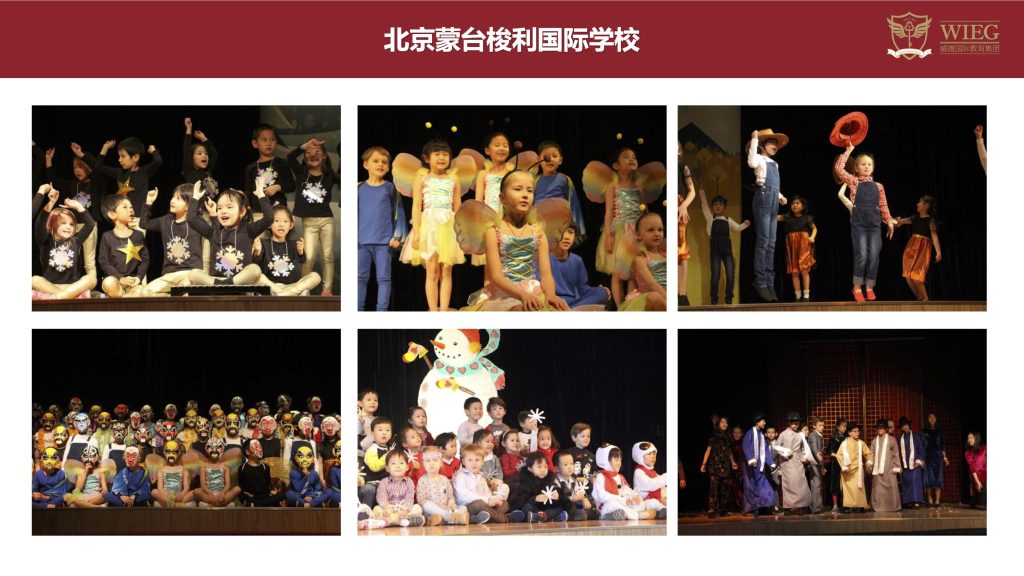
Collaborated with Broadway and the Tony Awards in China to establish the ‘Montessori·Broadway·Tony Awards China Art Education Base’. While it may seem distant from Montessori philosophy, it ultimately returns to the essence for students—art as a means for children to understand the world, rather than merely an additional skill training.
A Ticket Through a Narrow Door
The Montessori method has always had its awkwardness in China. It advocates mixed-age, autonomy, a slow pace, and no grading; while mainstream education in China emphasizes stratification, standardized testing, high intensity, and high rankings. There is still no clear answer on how these two educational philosophies can coexist.
A more realistic issue in the industry is quality. In 1967, the U.S. Patent and Trademark Office ruled that the term ‘Montessori’ has a ‘generic and/or descriptive meaning’—any institution can use this label. In a 2005 survey covering eight major cities in China, 92.8% of kindergarten principals knew about Montessori, and 78.8% of the top 20 kindergartens had introduced Montessori teaching, but industry interviews frequently mentioned complaints about ‘superficial understanding’ and ‘crash courses’.
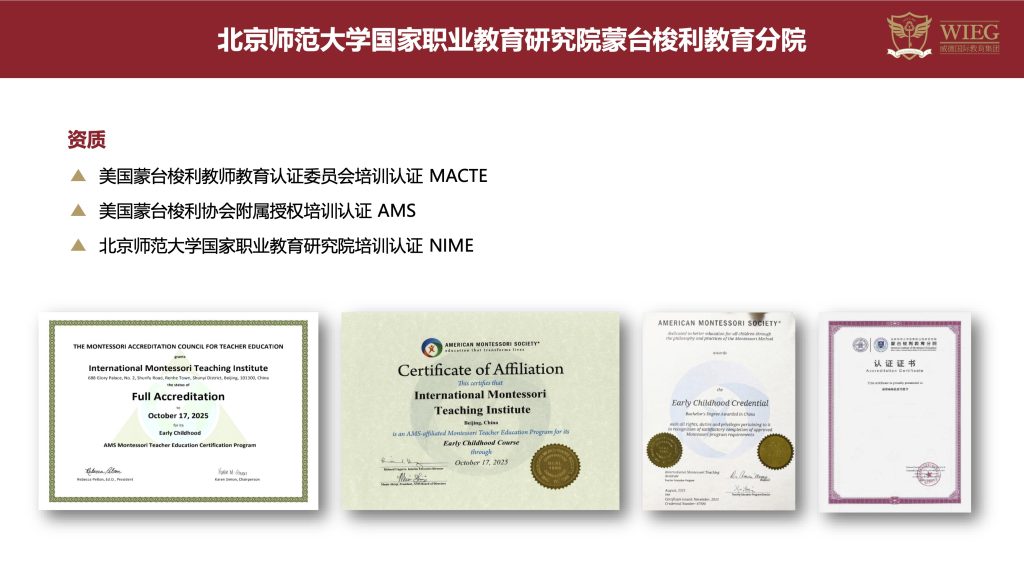
The scarcity of AMS certification is magnified against this backdrop. Of the approximately over 1,300 member schools worldwide, only about 18.7% have received formal certification; the process typically requires 2 to 3 years of self-evaluation, document review, and on-site visits, with re-certification every 7 years. MSB is one of the very few schools in mainland China holding this certification.
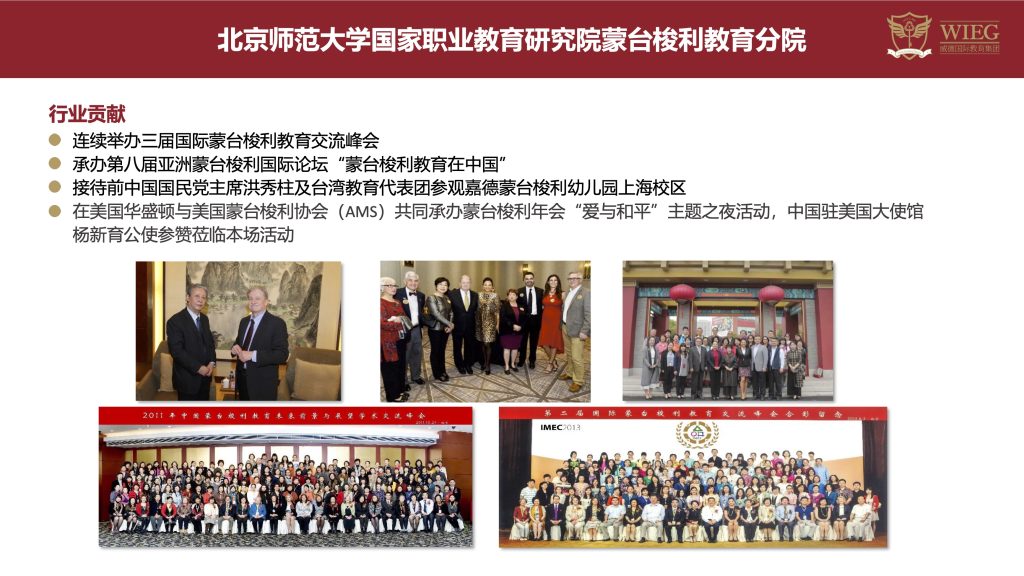
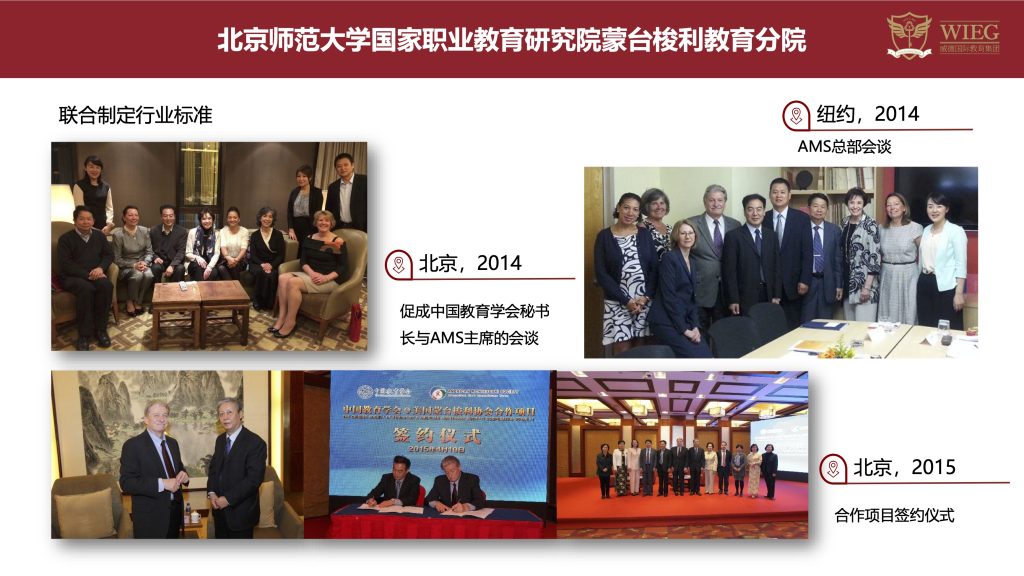
The group it belongs to, Weide International Education Group, has always positioned itself as a ‘standard setter’. The Montessori Education Branch of the National Institute of Vocational Education at Beijing Normal University (NIME) was established in 2009 and officially authorized by BNU in 2016. The group’s chairman, Wu Sihui, facilitated a meeting in 2014 between Yang Nianlu, the Secretary-General of the Chinese Society of Education, and then AMS President Joyce S. Pickering, with the topic being ‘Establishing Montessori Standards in China’.
However, MSB cannot bypass its ceiling. According to the ‘Management Measures for Foreign Children’s Schools in Beijing’, the enrollment target is limited to ‘children of foreign personnel legally residing in Beijing’. Regardless of how unique the curriculum or stable the faculty, its market will always be a small pond strictly defined by policy—and the water in that pond is getting shallower.
The Confidence of Slowness
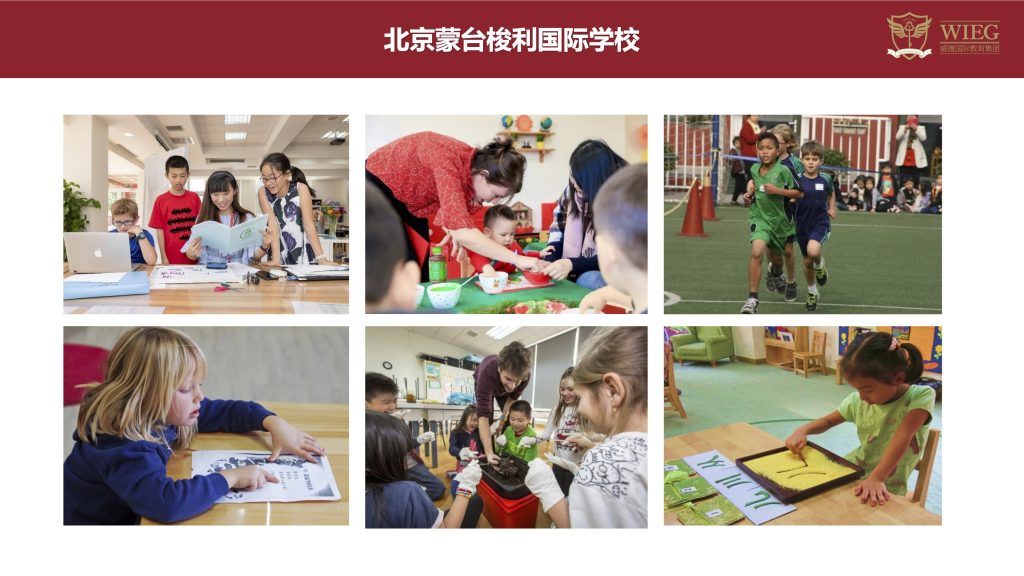
On the campus of Xiangjiang North Road, the pace is noticeably slower than that of several nearby schools. The average tenure of teachers is quite long, with many having been there since the school’s inception; the infant, preschool, primary, and middle school buildings are independently separated; students in pure English classes have 40 minutes of focused Chinese instruction every day, while bilingual classes strictly implement half a day in English and half a day in Chinese. The corridors are adorned with modernist murals completed by elementary students under the guidance of Spanish artist El Tono.
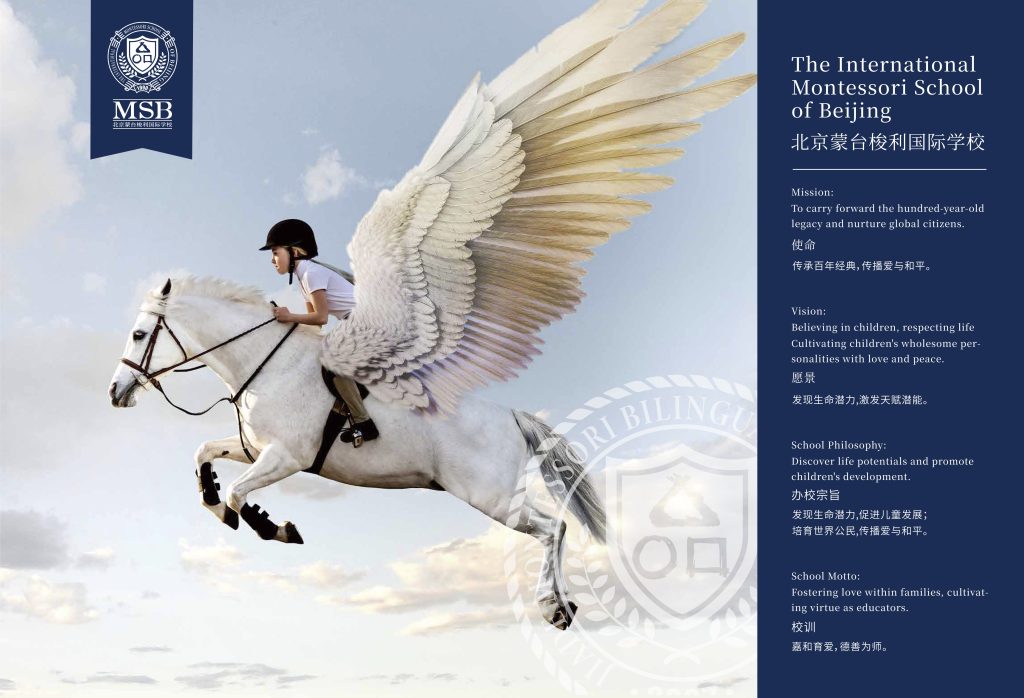
MSB’s mission is ‘to inherit a century of classics and spread love and peace’, with a brand vision of ‘discovering life potential and inspiring innate talents’, adhering to an educational philosophy that promotes comprehensive student development, aiming to cultivate students’ overall quality, global perspective, and leadership abilities, enhancing children’s spirit of independent innovation, and helping them grow into loving citizens facing the future world.
A quote from Maria Montessori: We cannot create geniuses, but we can provide opportunities for their growth. Over the past 35 years, MSB has not turned itself into a giant international school, but it has consistently made space for a heterogeneous educational approach on Chinese soil. In a rapidly reshuffling market that pressures towards homogenization and the top tier, this ‘slowness’ is not passive but an expensive choice.
No one can answer whether the next 35 years can be sustained. However, the 10 children in that embassy classroom in 1990 have already left their mark in the history of education in China.
This report synthesizes public information from Beijing Montessori International School and Weide International Education Group, policy documents from the Beijing Municipal Education Commission, archives from the Chinese Montessori Expert Association, the Hurun Education 2025 Rankings, Ding Si Research Industry Reports, AMS certification standards, official information from PYLUSD, and the 2025-2026 national high school rankings from U.S. News & World Report, as well as various media reports.