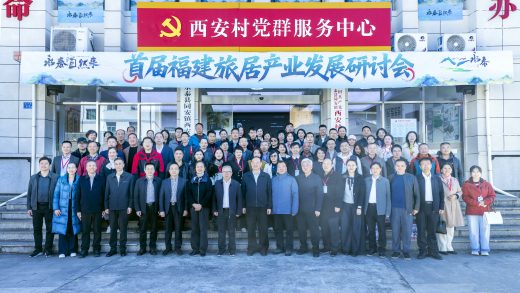
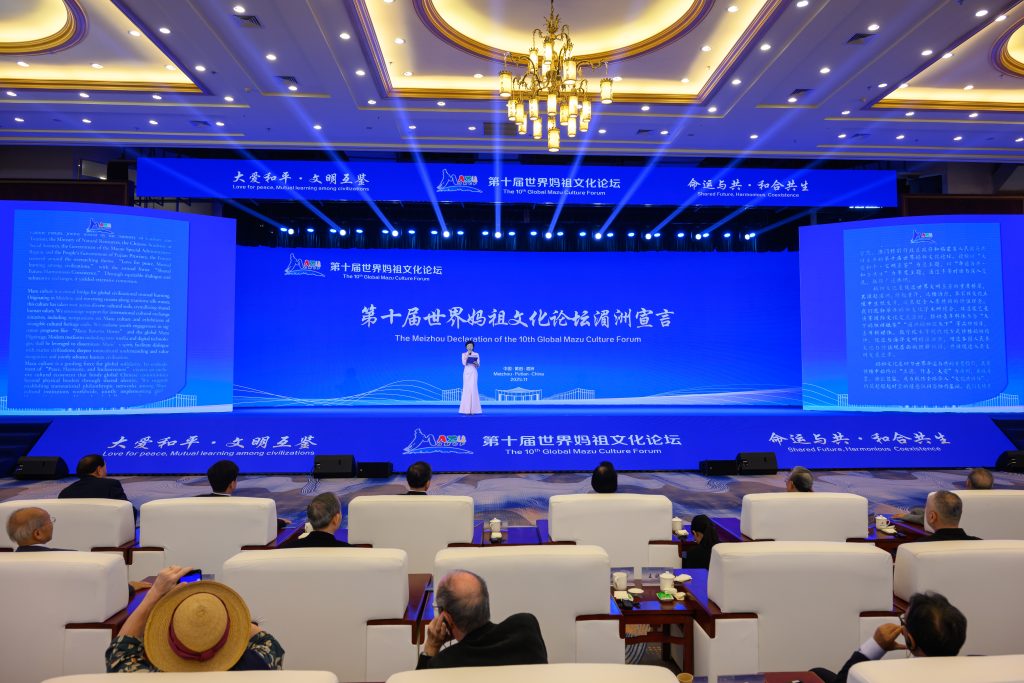
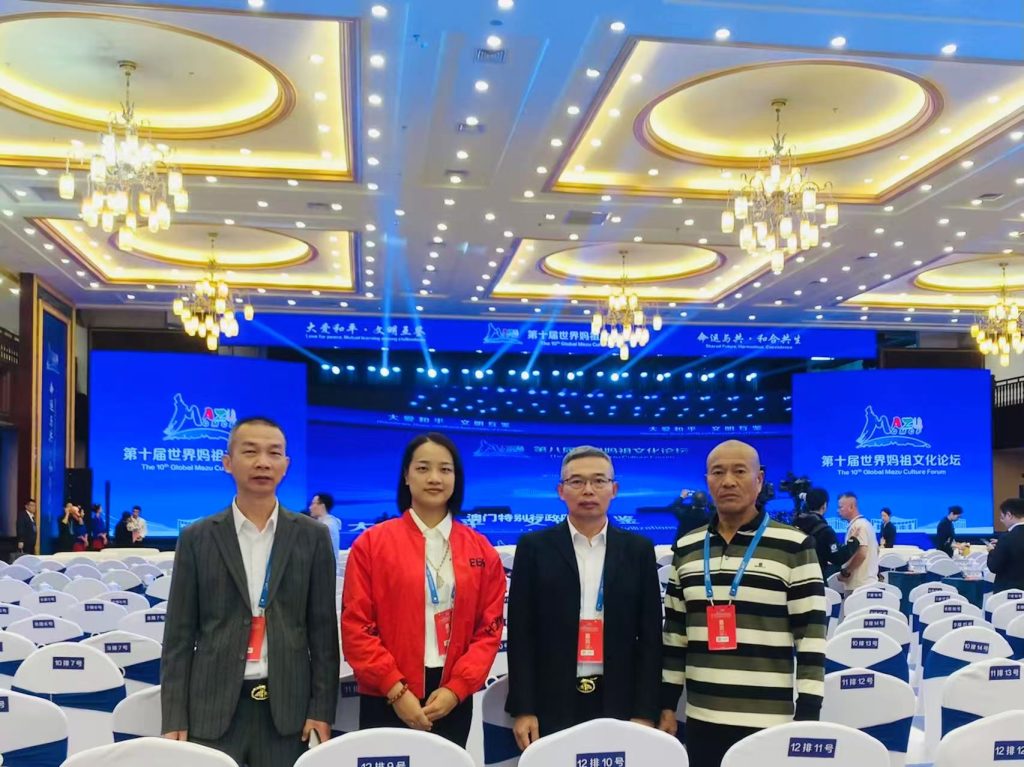
Meizhou Island, Fujian – The Tenth World Mazu Culture Forum, co-hosted by the Ministry of Culture and Tourism of China, the Ministry of Natural Resources of China, the Chinese Academy of Social Sciences, the Government of the Macao Special Administrative Region, and the People’s Government of Fujian Province, was grandly opened on Meizhou Island, Putian, Fujian on November 2. Su Hui, Vice Chairman of the National Committee of the Chinese People’s Political Consultative Conference and Chairman of the Central Committee of the Taiwan Democratic Self-Government League, attended and announced the opening of the forum. Zhou Zuyi, Secretary of the Fujian Provincial Party Committee and Director of the Standing Committee of the Fujian Provincial People’s Congress, delivered a speech.
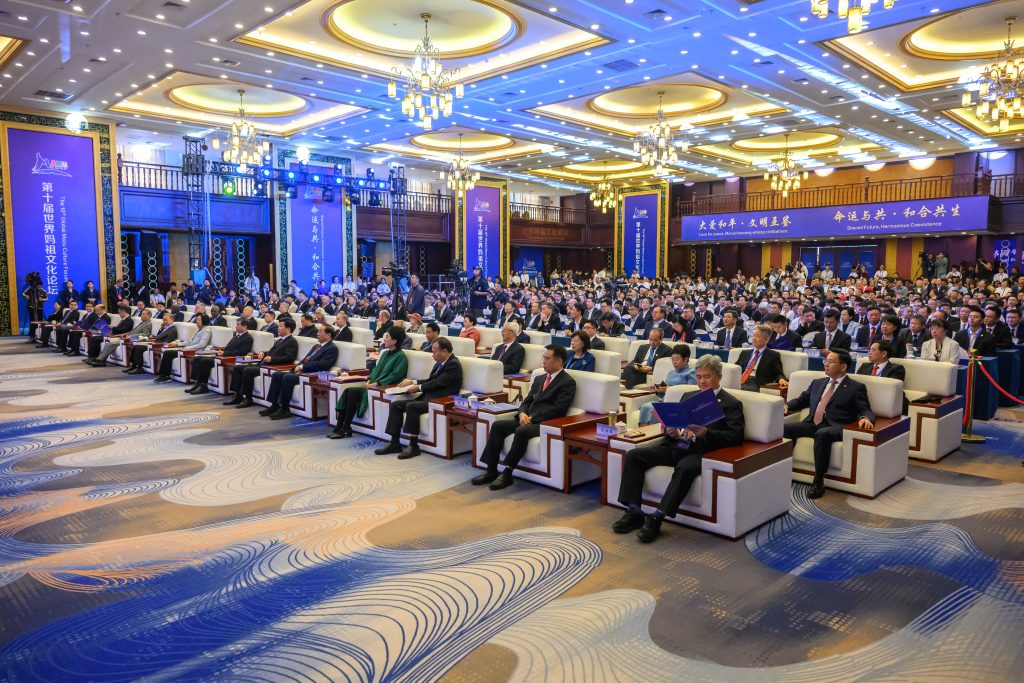
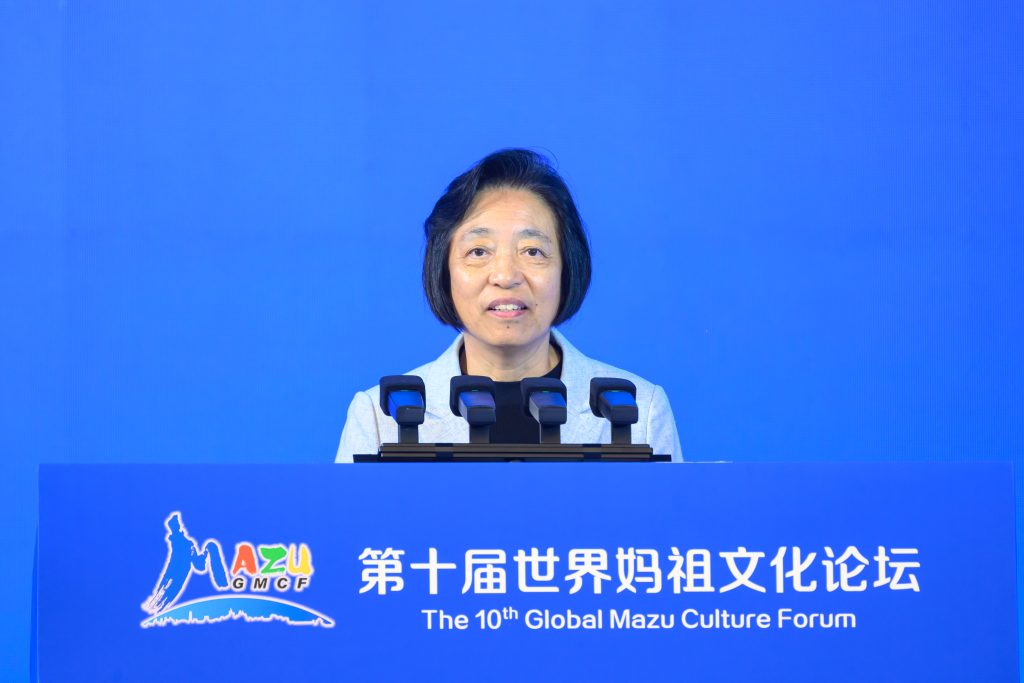
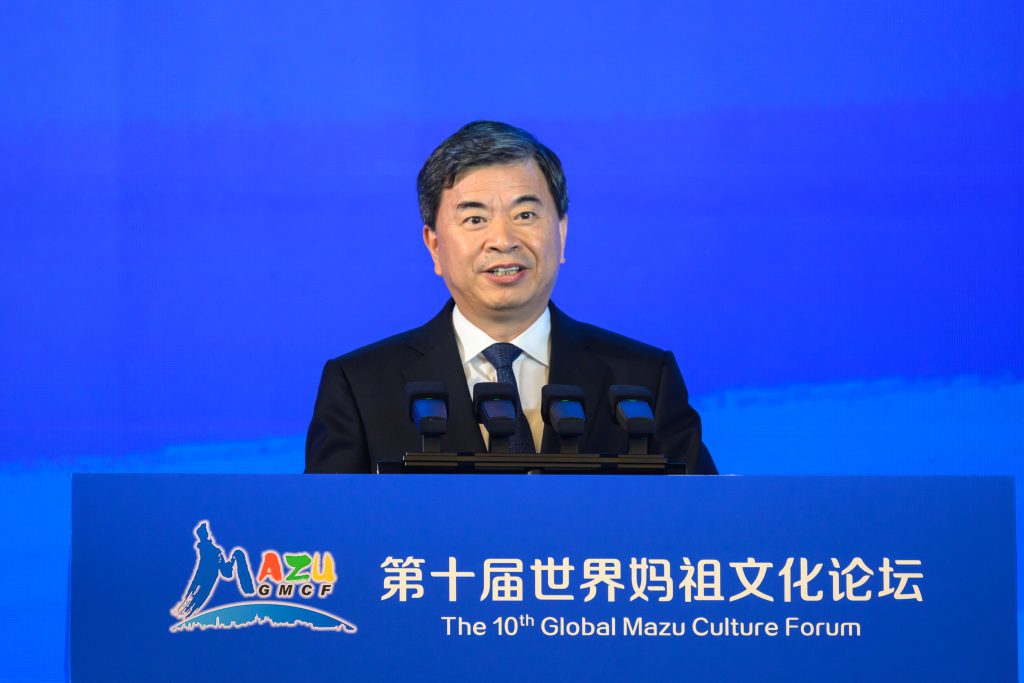
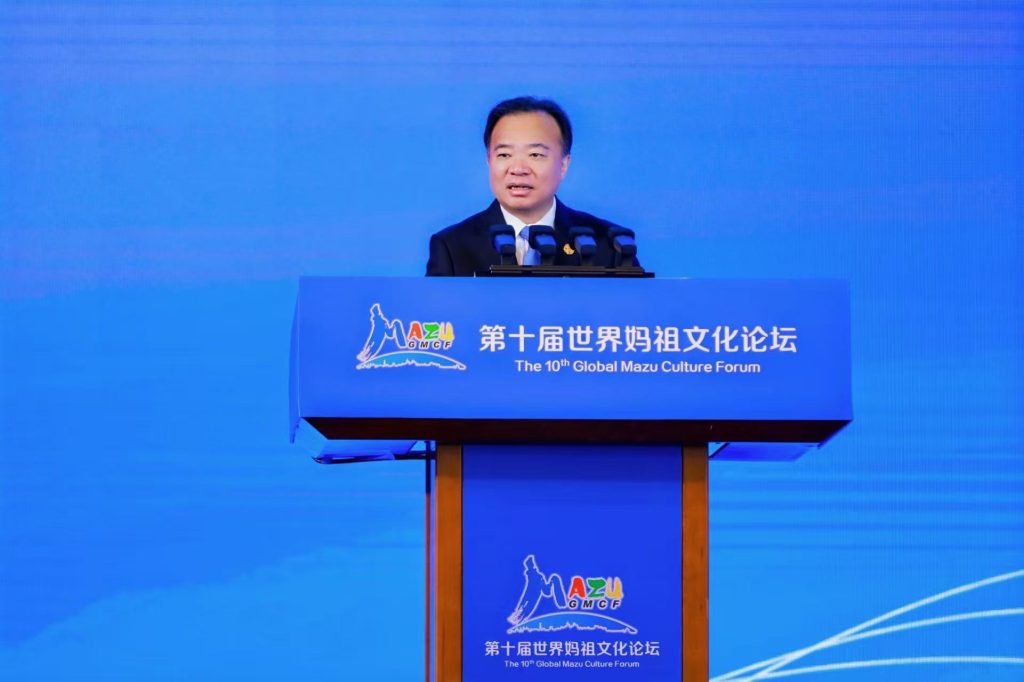
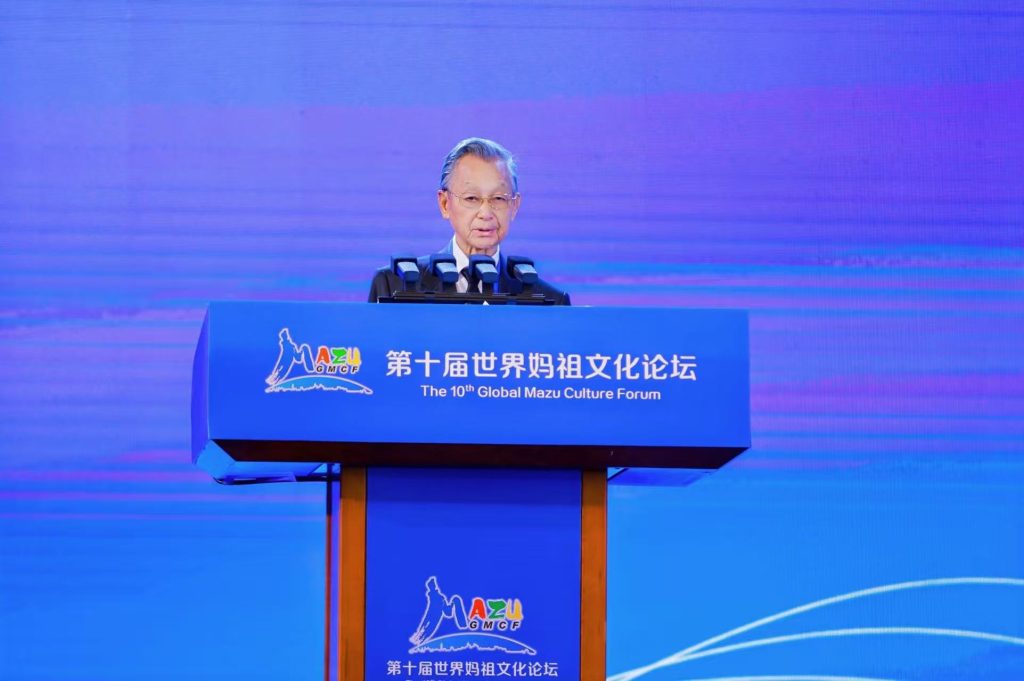
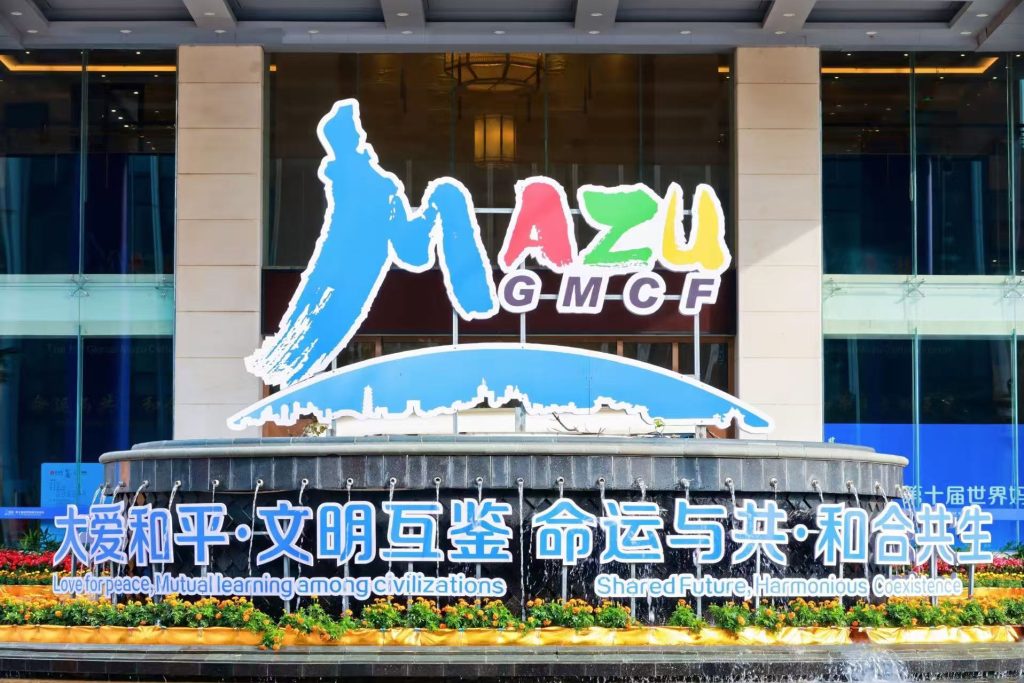
The theme of this forum is “Great Love and Peace·Civilization Mutual Learning”, and the annual theme is “Shared Destiny·Harmony and Coexistence”. The forum established 11 sub-venues in five continents and Hong Kong, Macao, and Taiwan for the first time, opening up interactive links in multiple time zones, languages, and platforms, highlighting the platform function of global linkage and communication between China and foreign countries. Stefan Löfven, former Prime Minister of Sweden, Siddharth Chatterjee, Resident Coordinator of the United Nations Development System in China, and George Hato, Councilor of São Paulo, Brazil, sent their congratulations via video; Chuan Leekpai, former Prime Minister of Thailand, delivered a speech.
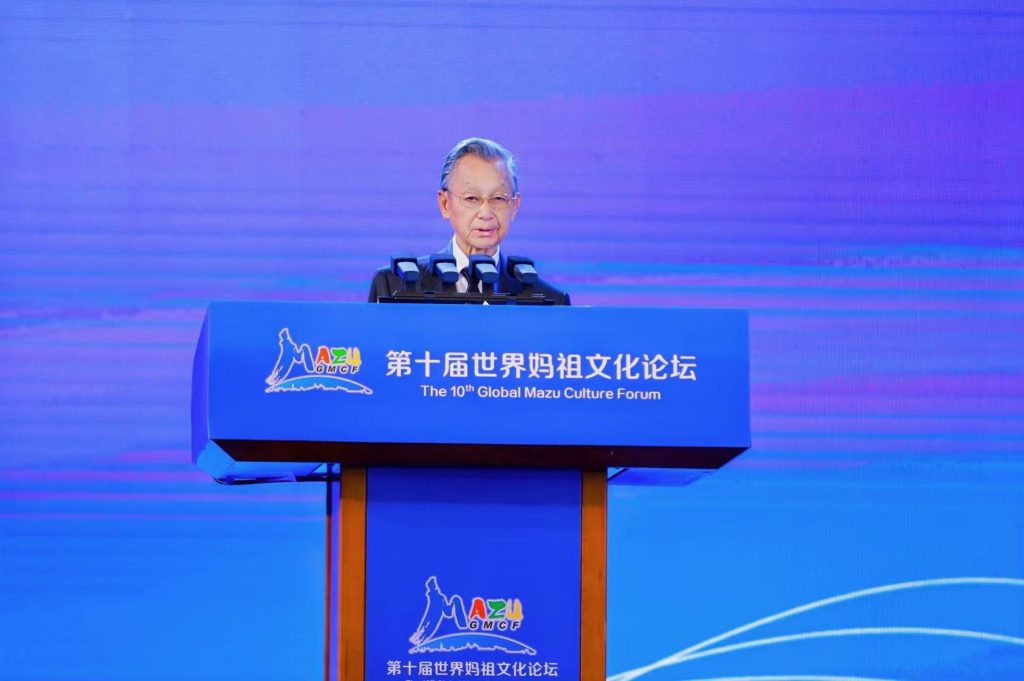
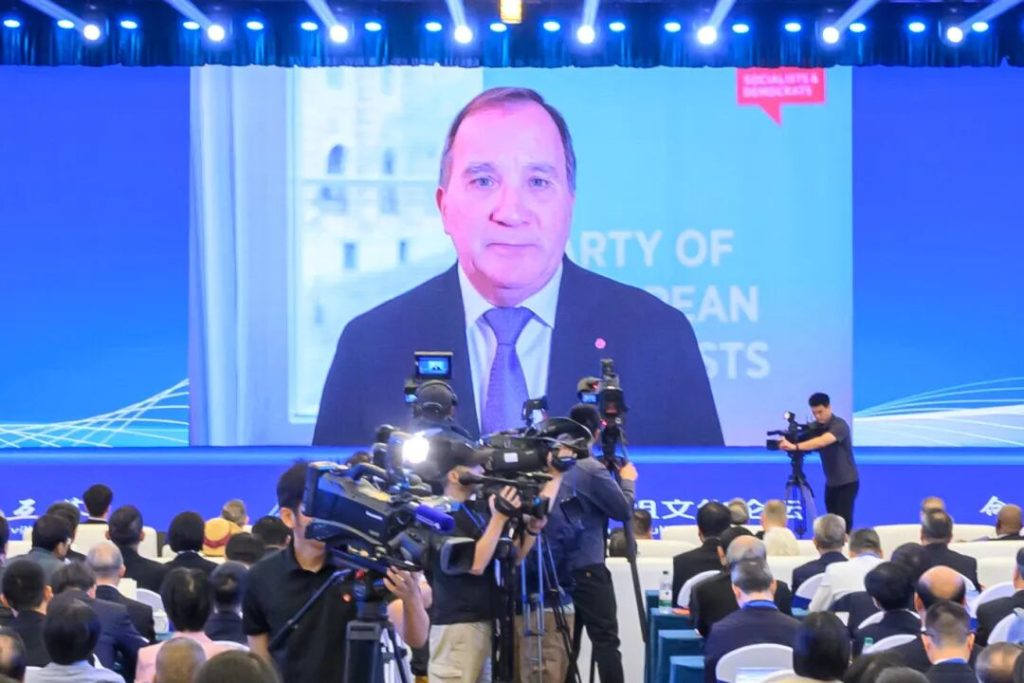
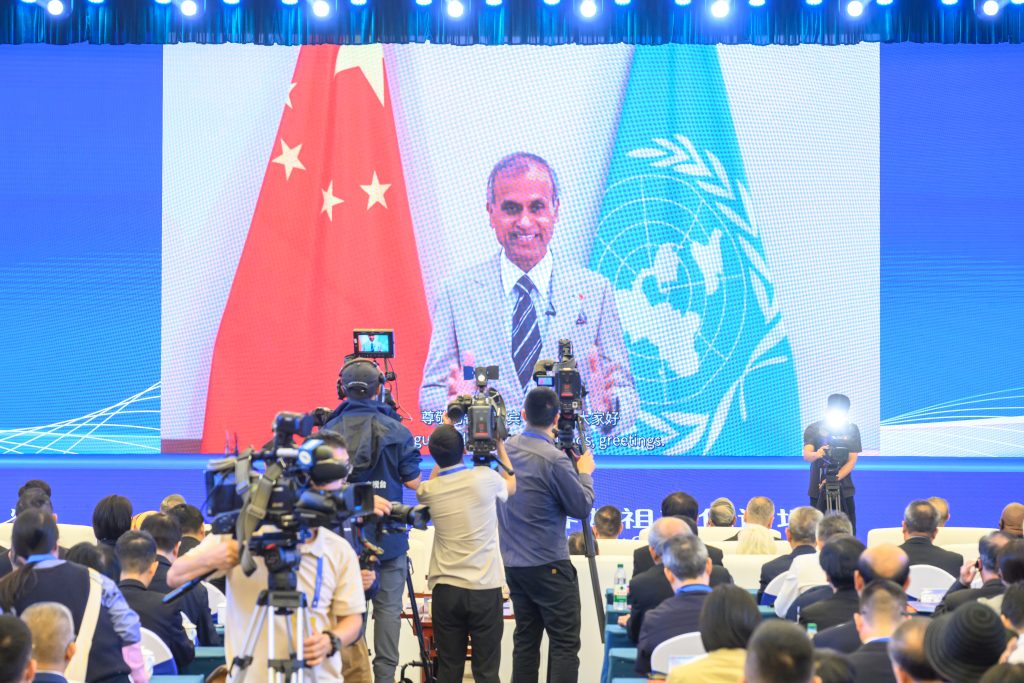
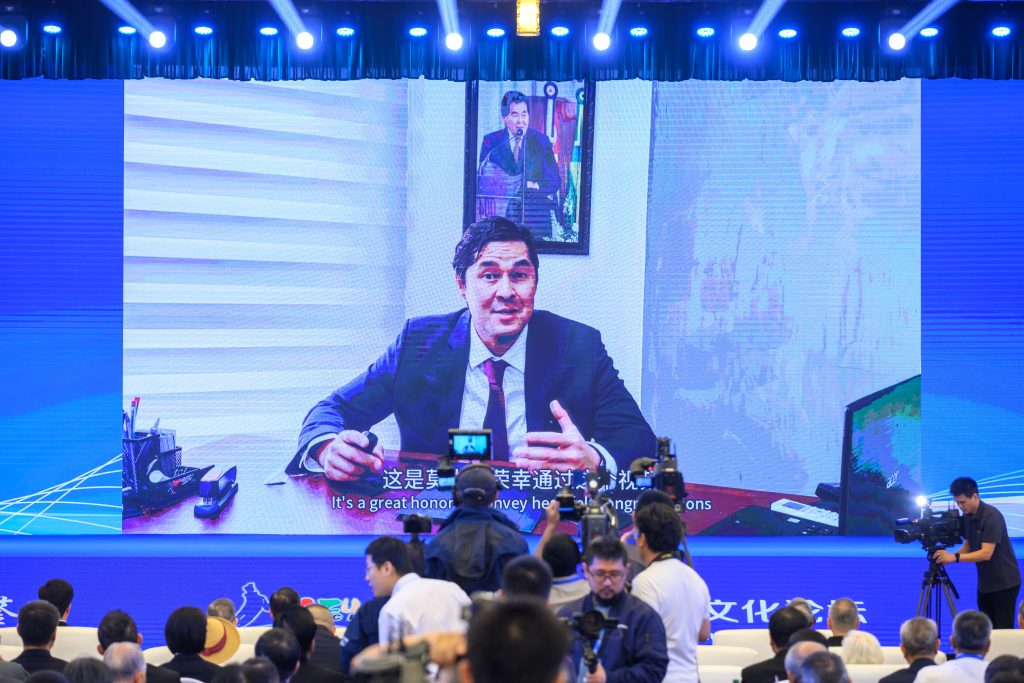
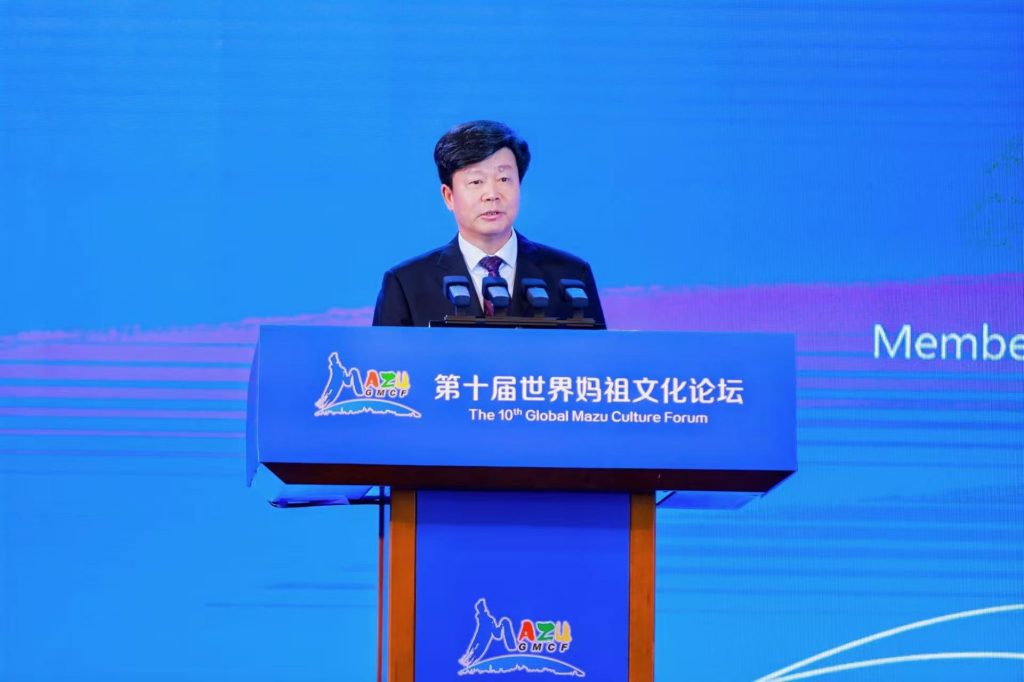
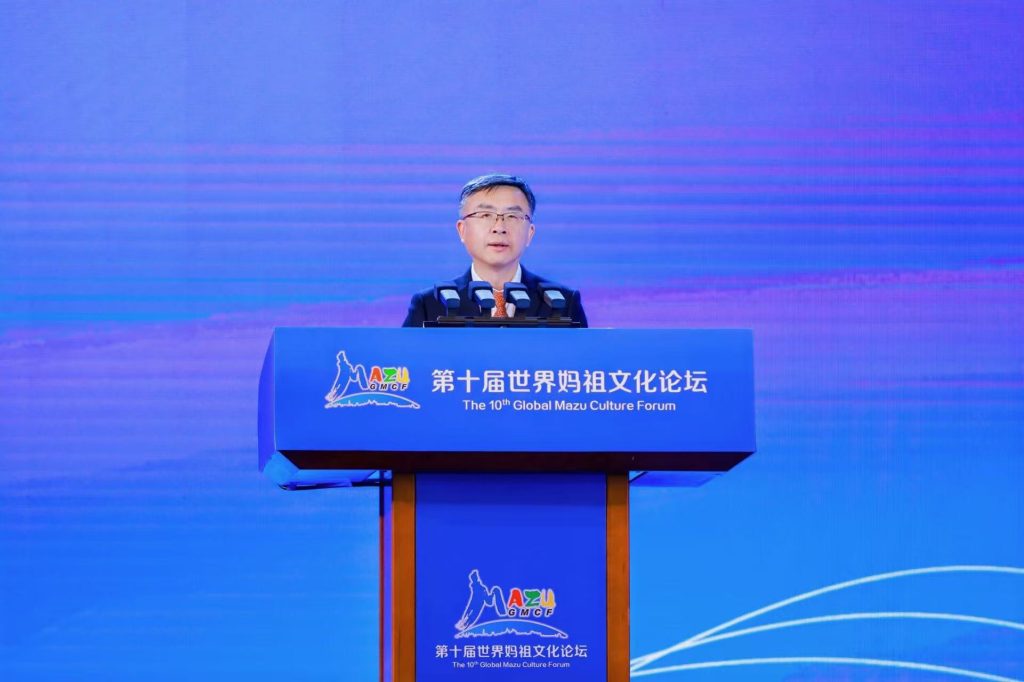
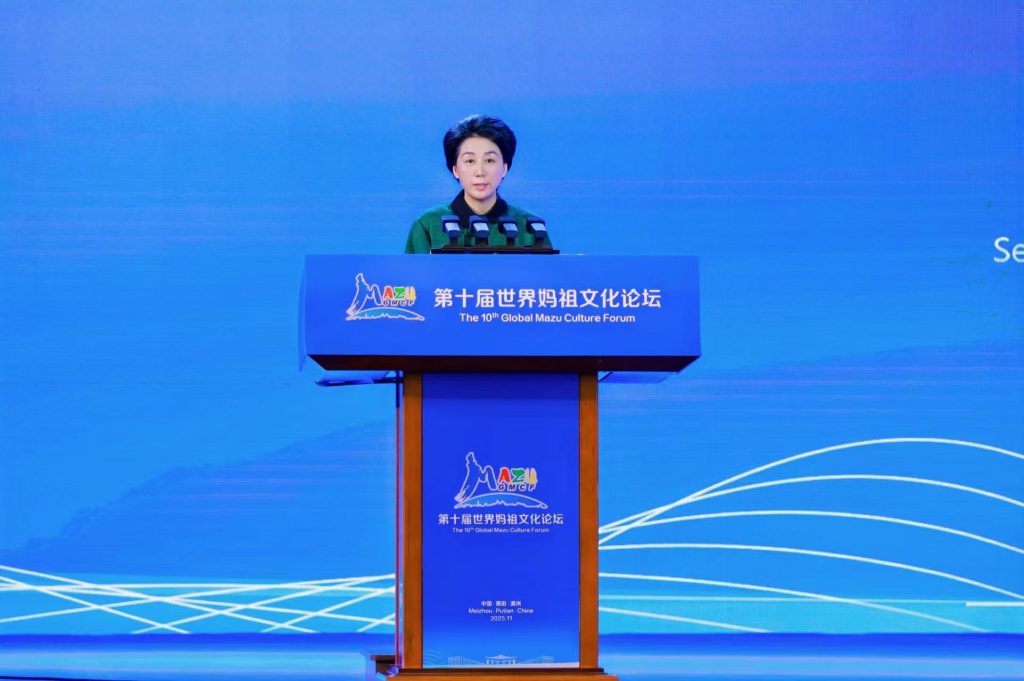
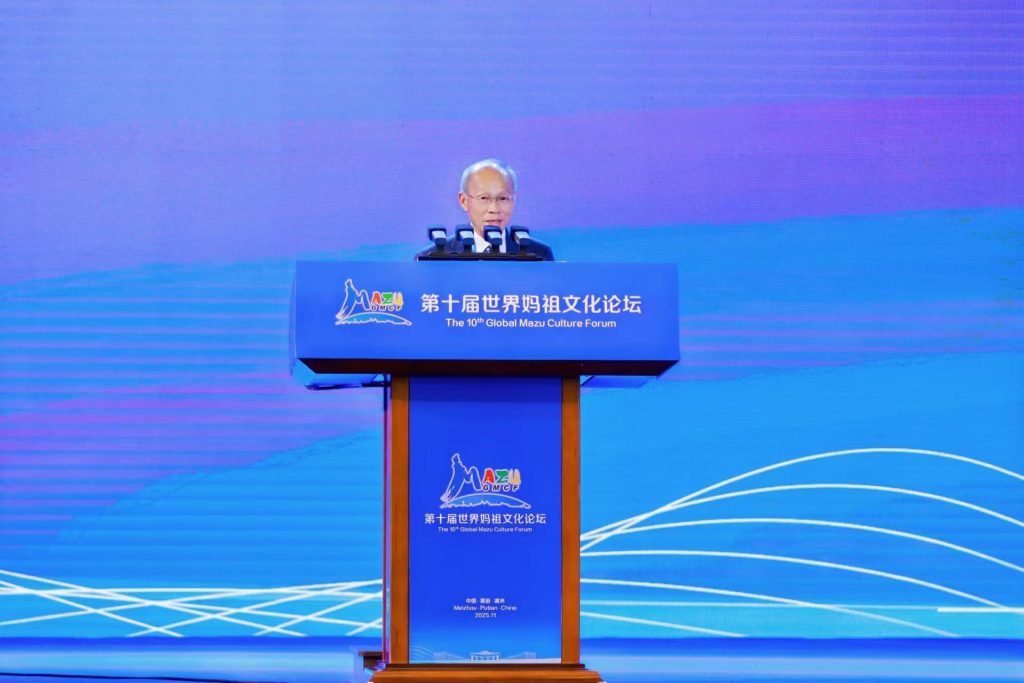
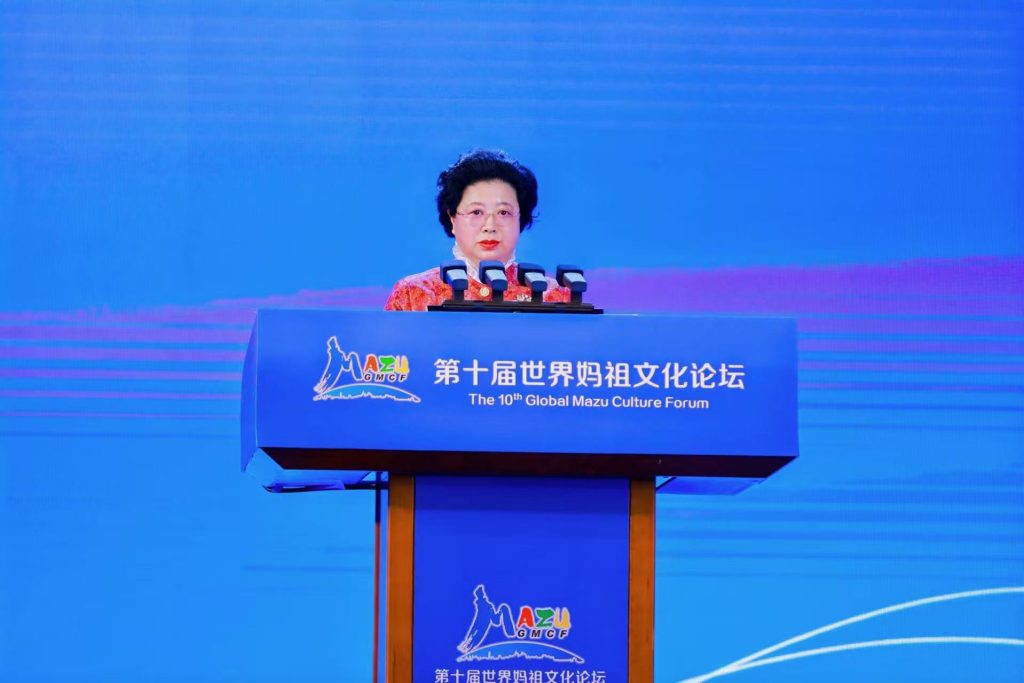
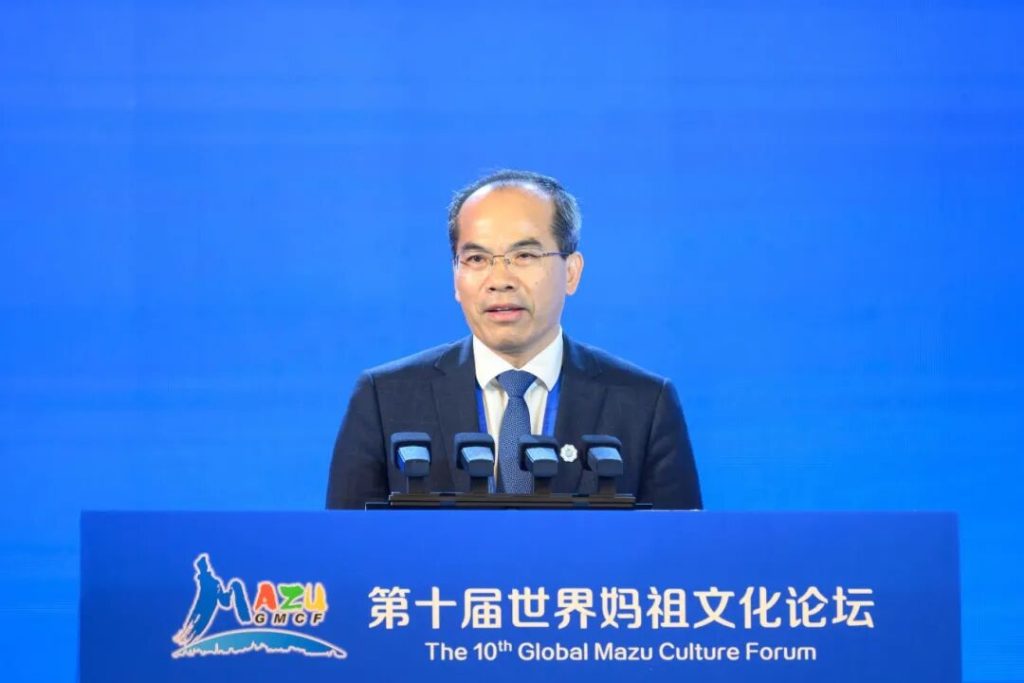
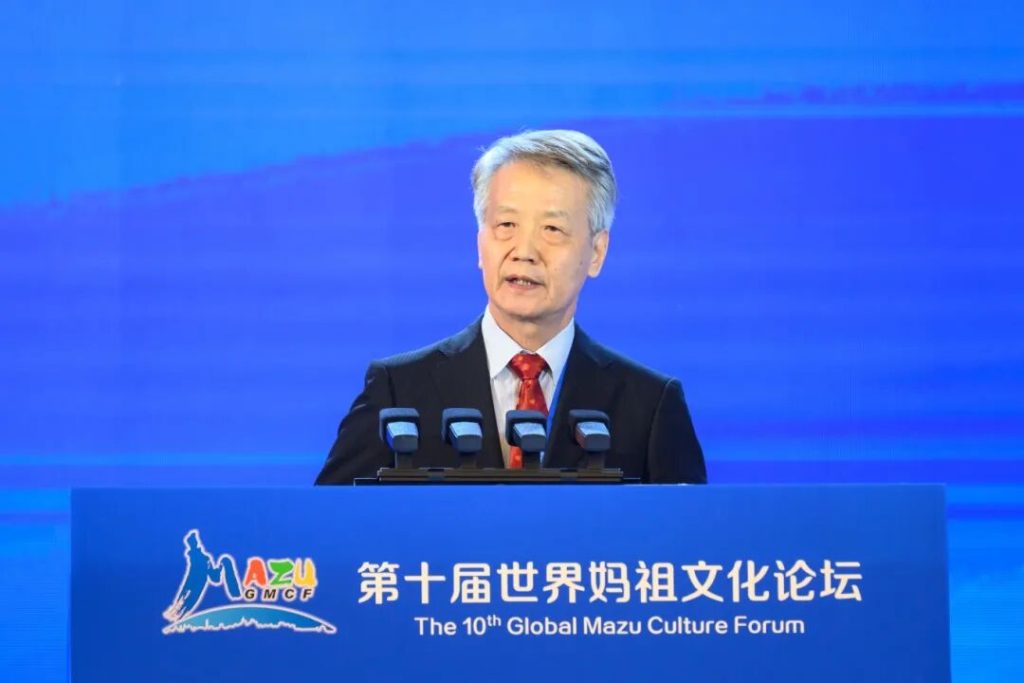
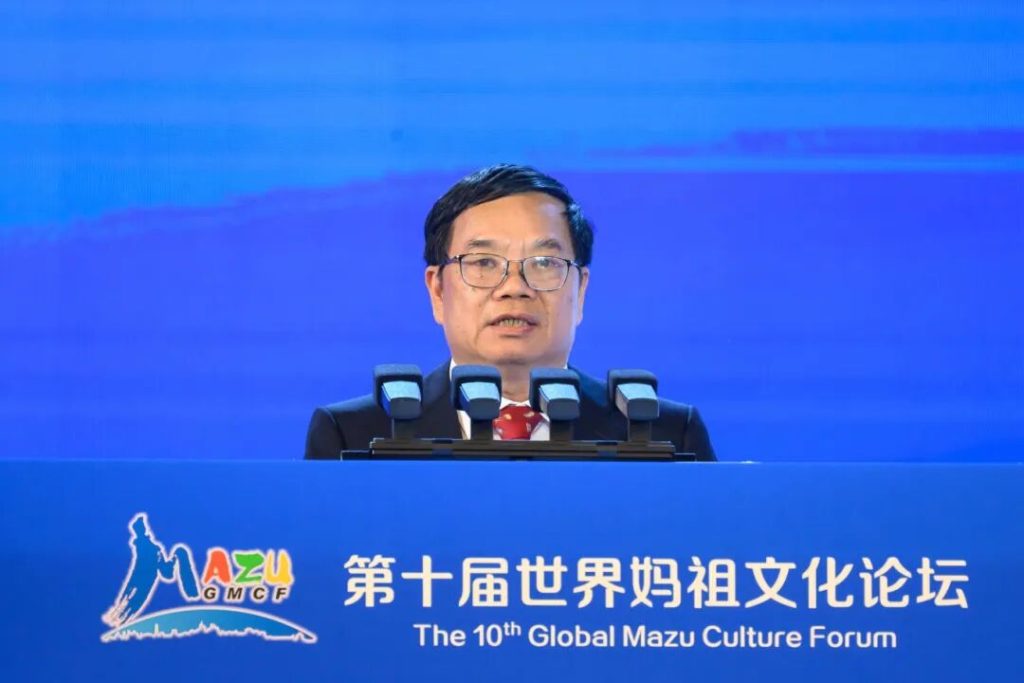
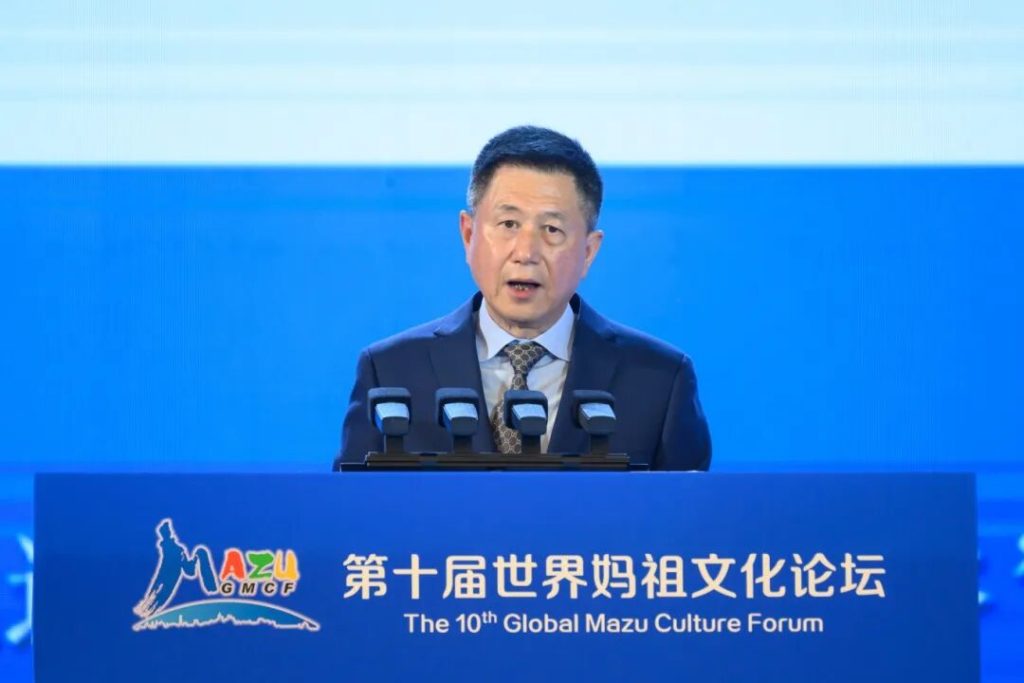
Guests from academia, research, and international organizations gave keynote speeches at the main forum, including German Sinologist and Dean of the Confucius Institute in Trier, Songshan Bu, President of Hohai University, Jinhai Zheng, former Dean of the College of Social Sciences at the Chinese Culture University in Taiwan, Jianmin Zhao, former Director of the National Satellite Ocean Application Center, Mingsen Lin, and President of the Chinese Intangible Cultural Heritage Protection Association, Xiaofeng Wang. They offered suggestions on marine civilization, cultural exchanges, intangible cultural heritage protection, and global governance.
Major Release: Technology and Culture Empower Each Other
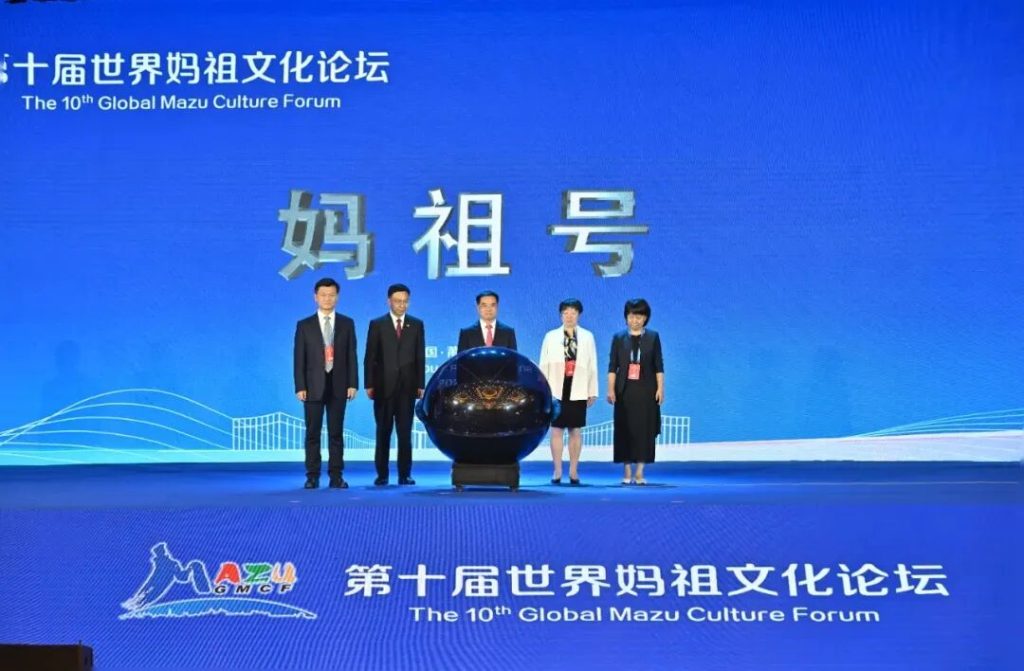
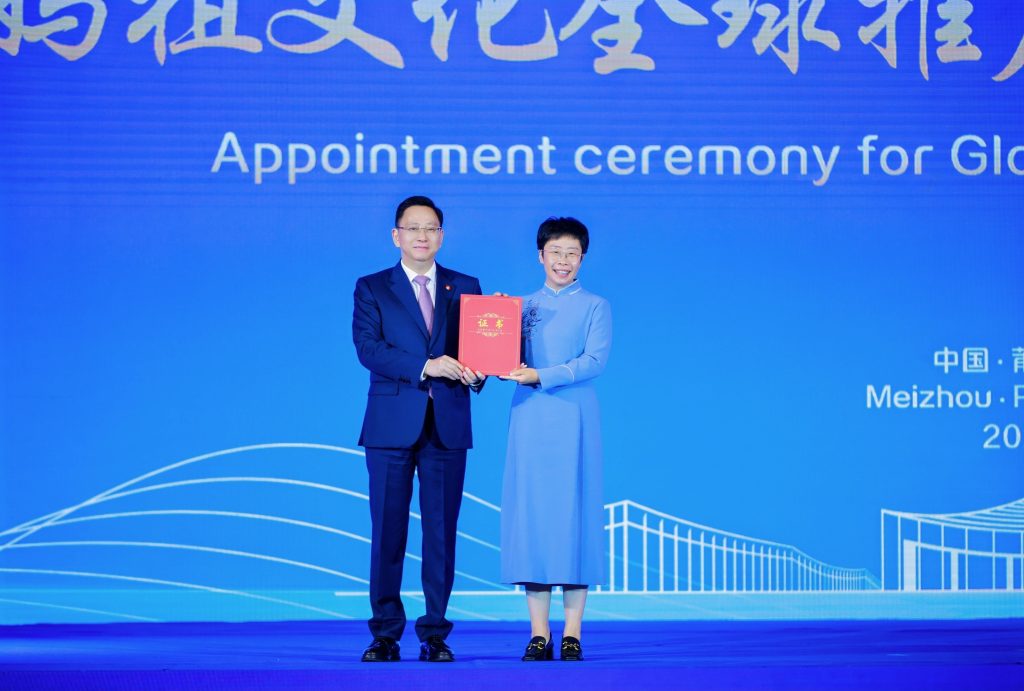
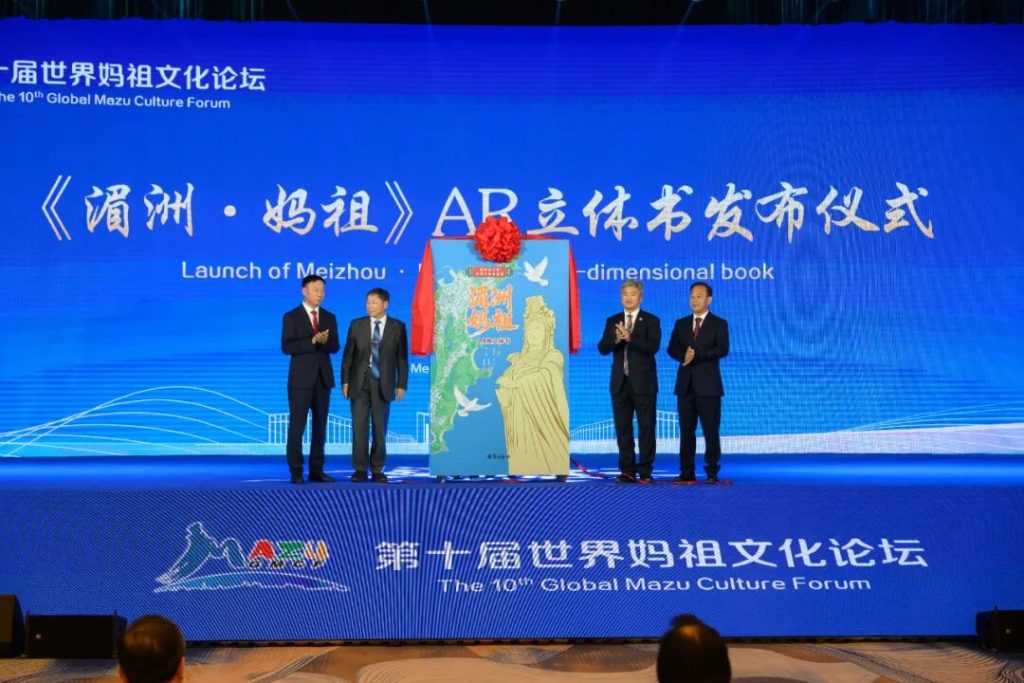
At the opening ceremony, China’s first sea wind and wave detection satellite was officially named “Mazu“, which will serve ocean monitoring, shipping safety, and disaster warning, reflecting the resonance of folk symbols and modern technology. The forum also released the “China Marine Culture Development Report (2025)”, launched the “Meizhou·Mazu” AR stereoscopic book, “World Mazu Culture Forum” and “Mazu Culture Spreading Worldwide” picture album, and announced the “Tenth World Mazu Culture Forum Meizhou Declaration”. Man Meng, Vice Chairman of the All-China Women’s Federation (concurrently) and Professor of Minzu University of China, was appointed as the Global Ambassador for Mazu Culture Promotion.
Eight Sub-forums: Addressing Contemporary Concerns
The forum set up 8 sub-forums around topics such as cultural inheritance, ecological governance, digital innovation, and youth exchange:
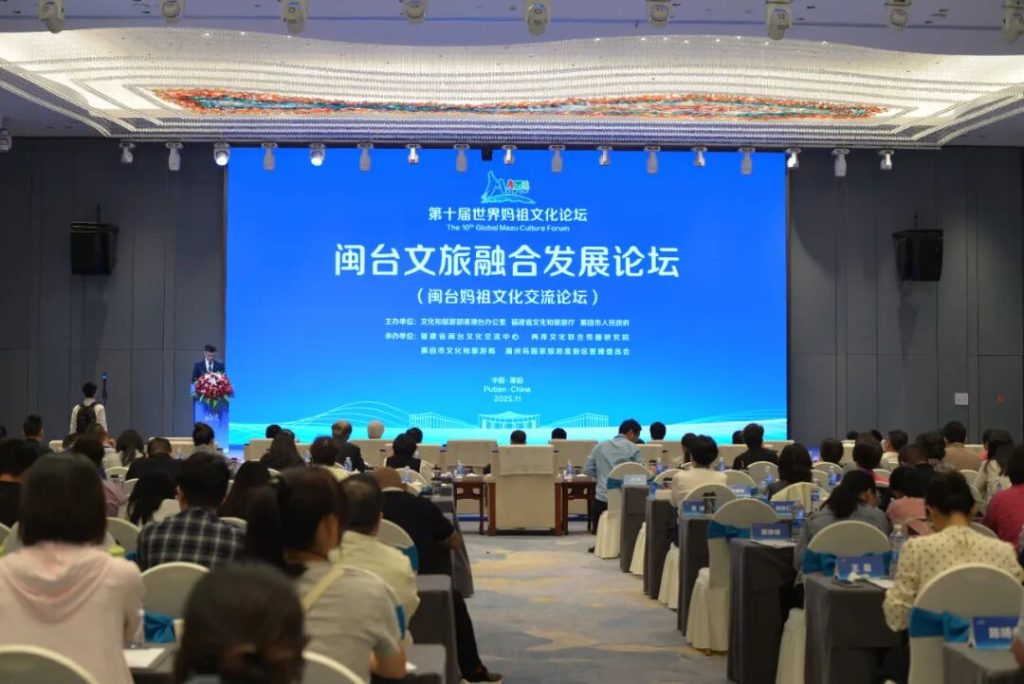
- Fujian-Taiwan Cultural Tourism Integration Development Forum
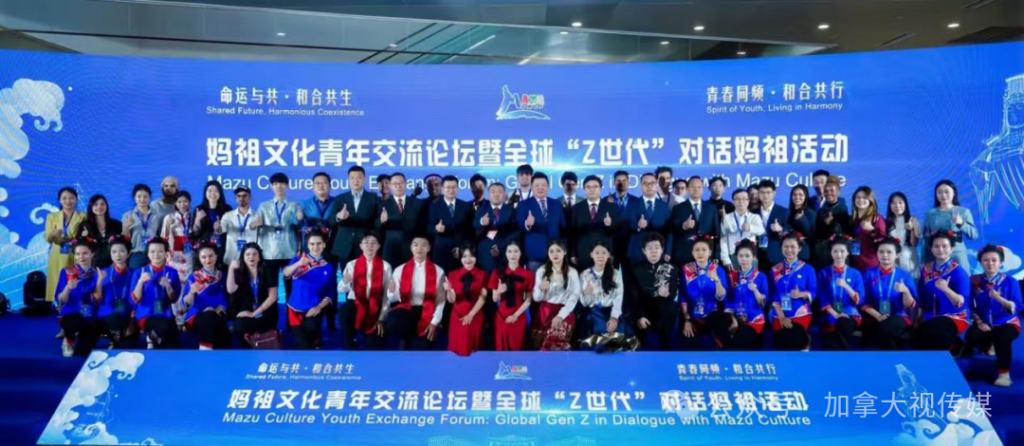
- Mazu Culture Youth Exchange Forum and Global “Z Generation” Dialogue with Mazu Event
- Mazu Great Love Peace Forum and the Eleventh International Mazu Culture Academic Seminar
- Mazu Culture Communication and Maritime Silk Road Forum
- Mazu Cultural Heritage Protection and Utilization Forum
- Mazu Culture Empowers Global Mangrove Protection and Utilization Forum
- Green High-Quality Development Forum for Island Electricity
- Mazu Culture Digital Heritage Innovation Forum
Cultural Tourism: Intangible Heritage “On Stage”, Scenic “Out of Circle”
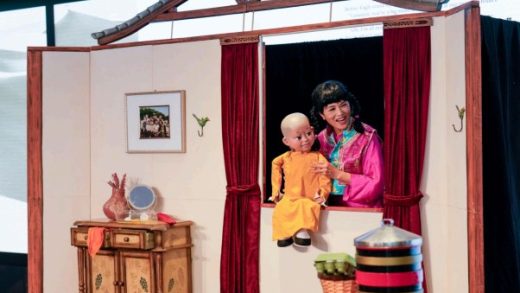
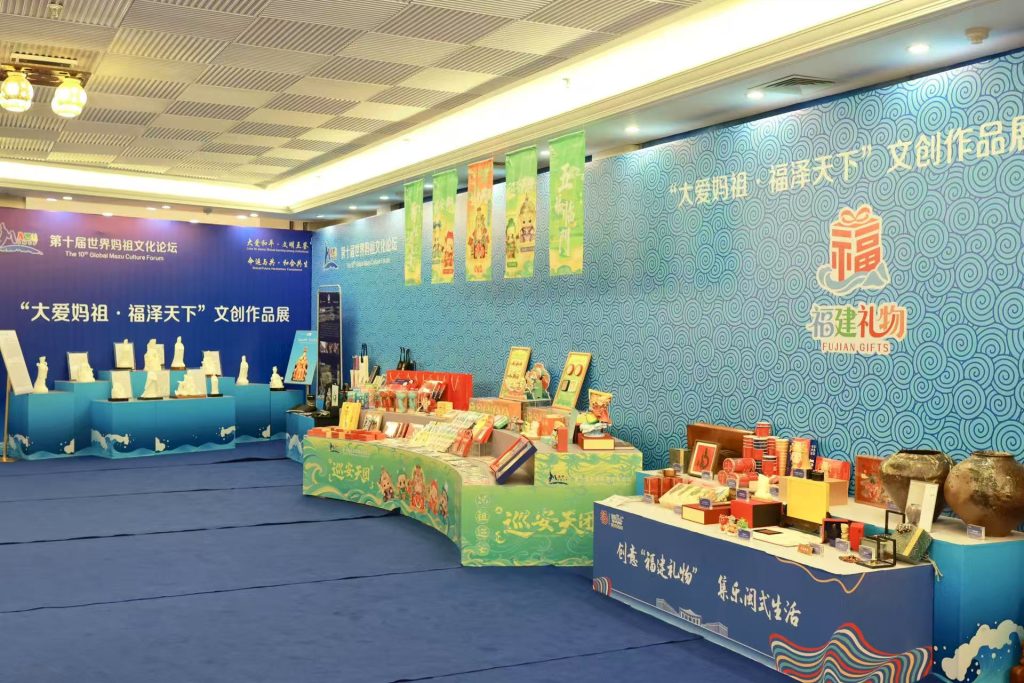
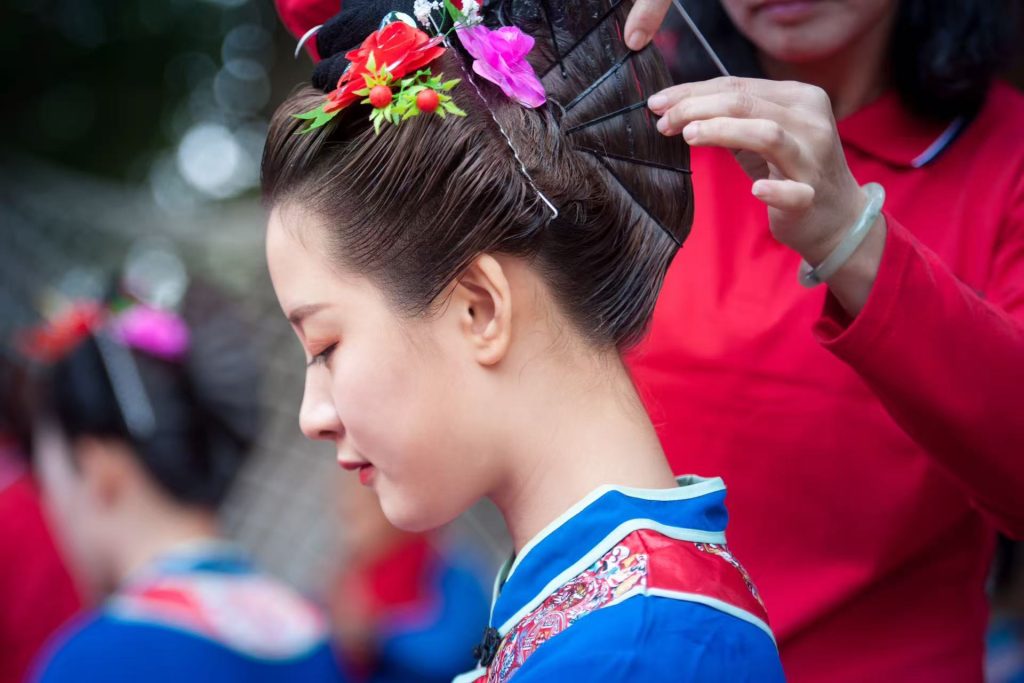
During the forum, theatrical performances such as “Impression·Mazu” and “Origin of Meizhou” were staged in succession, and activities such as Meizhou Women’s Hair Bun Skills and Costume Display presented the dynamic inheritance of “non-heritage + cultural tourism”. The organizer launched the “Cross-Strait Integration Community” for the first time, providing convenience and support for Taiwanese compatriots to work, start businesses and live in Putian, and promoting the extension of cross-strait exchanges from cultural resonance to people’s livelihood integration.
World Mazu Culture Alliance: A Cultural Link Connecting Five Continents
As an important international cooperation organization of this forum, the World Mazu Culture Alliance fully played the role of a global communication platform during the event. The alliance, together with member organizations and mainstream overseas media, reported the forum dynamics in Chinese, English, Spanish and other languages, covering multiple countries and regions in Asia, Europe, America, Oceania and Africa, showing the vitality and appeal of Mazu culture in the global vision.
The head of the alliance, Li Wenqi, said that in the future, it will continue to promote a series of projects such as “Global Youth·Mazu Dialogue” and “Mazu Culture International Week“, deepen the contemporary communication of Mazu spirit through cultural research, art exchange and public service, and make the concept of “morality, doing good, and great love” transcend language and region, becoming a cultural bridge connecting the hearts of the world.
Ten Years in Retrospect: From Academic Forum to Global Humanities Platform
This year marks the tenth anniversary of the World Mazu Culture Forum. Over the past decade, the forum has closely followed the pulse of the times, revolving around topics such as Mazu culture and marine civilization, cultural exchanges, and a community with a shared future for mankind, completing the transformation and upgrade from a single academic forum to a global humanistic comprehensive platform, forming a connecting network inside and outside, an innovative expression system, and a multi-dimensional communication matrix. The representatives believed that the naming of the “Mazu” and the release of the “Meizhou Declaration” marked the deep connection between folk spirit and modern technology, regional cooperation and global governance, providing a cultural scheme and practical path for promoting peace and sustainable development.
The copyright of this article belongs to the “World Mazu Culture Alliance”, and has been translated into more than 20 languages worldwide, covering more than 50 countries and regions, demonstrating the global influence of Mazu culture. Readers from various countries can click on the link below to read the corresponding language version of the Tenth World Mazu Culture Forum. Responsible editor: Lin Bingbin, Luo Fujin New York report. Photography: Cai Hao. Please indicate the source and retain the author information when reprinting, thank you for your attention and support.